Short answer
If your garage door won't close, check the two sensors near the floor first: wipe the lenses and make sure both lights are steady. If it still won't close, or you heard a bang, stop and call (954) 947-4016.

When a garage door won't close, blame the safety sensors first; after those come opener settings, a broken spring and a door out of its track. Pick the symptom below that matches yours. Each one covers what it usually is, what you can check without risk, and when to stop and call.
If your garage door won't close, check the two sensors near the floor first: wipe the lenses and make sure both lights are steady. If it still won't close, or you heard a bang, stop and call (954) 947-4016.
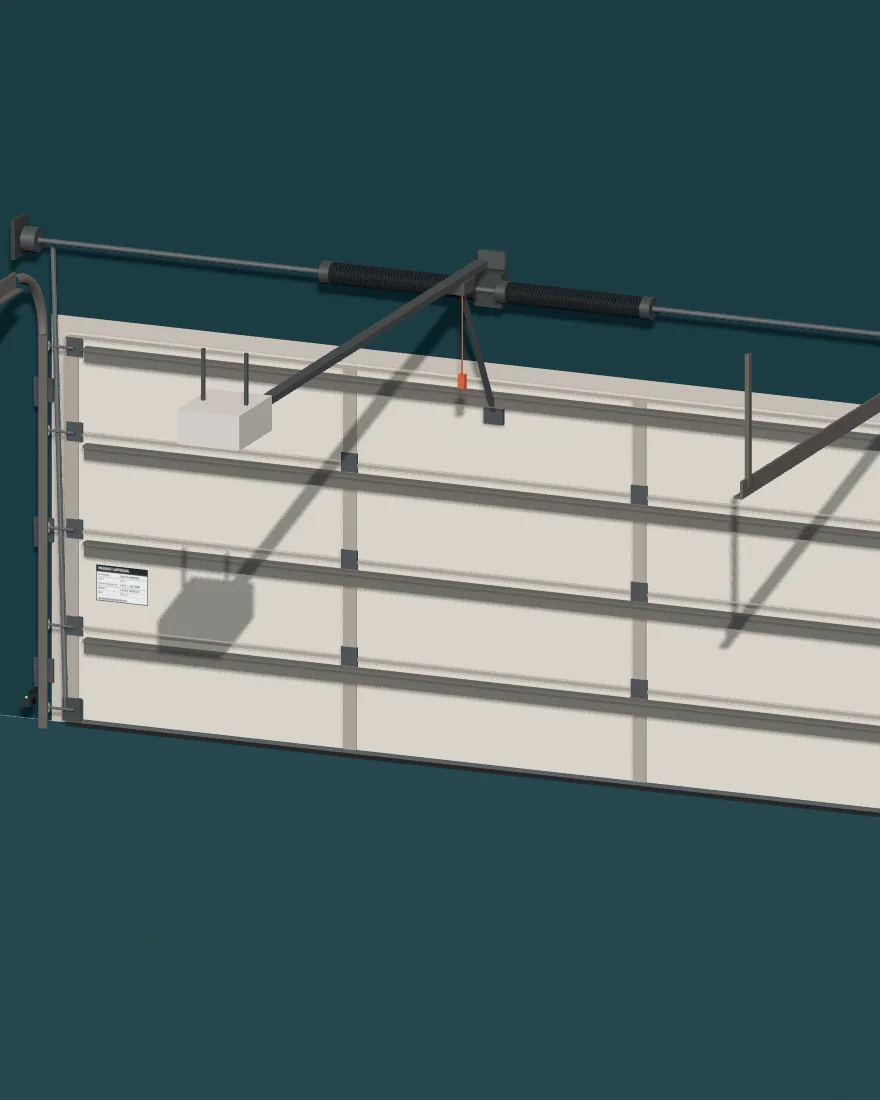
Usually: the safety sensors have lost each other. A dirty or damp lens, one sensor bumped off line, or some object in the beam is enough. Less often, the wall control's lock switch is on, or the opener's close limit has drifted.
Check safely: wipe both lenses, then check the two indicator lights; both should glow steadily. Clear anything near the door's path. If sun is shining into one sensor, block it with cardboard and run the door again.
Stop and call if: a sensor light stays dark after cleaning, the wire is cut or crushed, or the door is open at night and won't come down.
Usually: it depends on where it turns around. If it turns before reaching the slab, suspect the sensors or something in the beam; see sensor repair. If it turns the instant it lands, the opener is mistaking the slab for an obstruction: the close-limit or force adjustment needs work, or there's a bump where the door lands.
Check safely: watch the exact spot where it reverses. Clean and aim the sensors. Look for a stone, a hose or packed dirt under the door.
Stop and call if: it reverses at the floor every time, or it doesn't reverse when something is in its way. A door that won't reverse is a safety problem; don't run it with kids or pets nearby until it's checked.
Usually: a torsion spring broke. Check the steel bar over the closed door: if the coil has split apart, that settles it. On older doors with springs along the ceiling tracks, one may be dangling.
Check safely: look, from the floor. Unplug the opener; that way nobody tries to raise the door. Snap a photo of the spring.
Stop and call if: you find a gap or a loose spring. Don't try to open the door, with the motor or with your hands. Spring gone while the door was up, and the house won't close? That's an emergency call.
Usually: a spring broke and the extra weight is too much for the opener, or the manual slide lock is holding the door. With the springs fine, the opener's start capacitor or drive gear may have failed.
Check safely: from the floor, check the spring coil for a gap. Make sure the slide lock on the door's inner face isn't pushed into the track. Release the button after a few seconds so the motor doesn't overheat.
Stop and call if: a spring has broken, or the motor keeps humming with both springs whole.
Usually: a spring that broke or lost its strength. The opener senses the added weight and halts to protect itself. Now and then it's the opener's force or travel setting.
Check safely: check the springs from the floor. Don't turn up the force setting to make it work; that hides the problem and makes the door more dangerous.
Stop and call if: you spot a broken spring, or the door drops quickly when it stops.
Usually: a cable slipped off its drum or snapped, or rollers came out of the track. A creased section can also bind on one side; that one is panel replacement.
Check safely: from a distance, look at both lower corners and both cables. Pull the opener's plug. Leave the car where it's parked.
Stop and call: always, for this one. The release cord, the rollers and the opener all stay untouched.
Usually: a flat remote battery, the lock or vacation switch on the wall control, or a remote whose pairing was lost.
Check safely: put in a fresh battery. Check the lock switch. Try a second remote. If none respond while the wall button works, pair one remote again using the opener's learn button.
Stop and call if: the opener won't learn any remote, or you want a lost remote erased.
Usually: dry hinges and rollers, worn roller bearings, a loose track bracket, or a bent section scraping the track.
Check safely: watch the door move and find where the noise starts. Spray garage door lubricant onto hinges and roller bearings. The tracks get no grease.
Stop and call if: the noise comes from the spring shaft or the drums, a roller wobbles or is cracked, or a section rubs the track; those lead to cable and track repair or panel replacement.
Usually: a spring is broken or has lost tension. A balanced door feels light and stays put halfway up; a heavy one puts that weight on the opener on every trip.
Check safely: look at the springs from the floor first. If one has broken, don't lift the door at all. If both look intact, close the door, get a second person beside you, then pull the release and raise the door a little to feel the weight. If it wants to fall, lower it gently and stop there.
Stop and call if: a spring has broken, or the door won't stay where you leave it.
Usually: a tripped GFCI or breaker; the release cord was pulled during the outage and the carriage never reconnected; or the opener's board took a surge as the power came back.
Check safely: reset the GFCI and check the breaker panel. If the release was pulled, close the door; with both springs intact, one tap on the wall button should send the carriage along the rail to hook onto the door again. If there's a battery backup, listen for a beep.
Stop and call if: the opener stays dead with power at the outlet, smells burnt, or the garage won't close and the house is exposed; that last one is emergency repair. Long outages happen here: after Irma, over three in four South Florida electric customers lost power, many for close to a week, according to the National Weather Service.
Blocked or misaligned safety sensors. Wipe both lenses, confirm both lights glow steadily and clear anything in the beam before you call.
No. The springs carry the door's weight; with one gone, that weight falls onto the opener, or onto you. Keep it shut and call.
Most often a spring has broken or weakened, and the opener stops because the load is too heavy. Look at the steel bar over the door: a split coil confirms it.
Call whenever springs, cables or the corner brackets are involved, the door sits crooked, or it won't reverse when something is under it. Cleaning sensors, changing batteries and resetting the outlet are safe to do yourself.
A person answers 24/7. A photo of the label or the part is often enough to start.
Texting works from a phone. From this computer, call (954) 947-4016, or send the photo from your phone to the same number.